
Identify Who Owns Randolph Property
Owner research starts with a tract, not a guess about a person. The Randolph County Revenue Commissioner links a public parcel viewer. The office also keeps the assessment roll. Its owner entry gives you a practical lead. Probate then supplies the recorded deed. That deed can confirm the grantee and the legal description. Keep a short worksheet. List the address, parcel number, owner spelling, deed date, and book or page.
- Enter the known address in the county-linked Randolph Alabama GIS viewer.
- Select the matching tract and record its parcel key, legal-description clues, and displayed owner name.
- Search that owner as grantee in the ING Probate land-record index.
- Open the newest likely deed and match its property description to the parcel, not just the name.
- If an entity is named, use the Alabama business search only to understand the public entity record.
A mismatch does not signal fraud. The Revenue roll updates on annual timing, and a deed can be recorded between updates. When evidence conflicts, ask each custodian about its own record. An address search may return several tracts. Compare road position, acreage, legal-description clues, and neighboring parcels before picking one. Save every candidate parcel number until the deed settles the match. That habit keeps a nearby parcel with a similar mailing line from being credited to the wrong owner.
Start With Randolph Revenue Records
The Randolph County Revenue Commissioner keeps assessment and tax information for about 36,500 parcels. A property record card lists and values land and building characteristics separately. Field labels vary by card. So read the owner entry as shown rather than expecting it to say "current owner."
The parcel record helps answer who owns a given property. That is because it ties a name to one mapped tract. Remember that it exists for assessment. Note the situs address, the property's physical location. Keep it apart from an owner's mailing address. A mailing address elsewhere does not mean the record is wrong. Nor does it mean someone different occupies the land.
- Owner of record
- The owner name carried in a specific official record.
- Situs address
- The physical address assigned to the parcel.
- Mailing address
- The address used to send tax correspondence.
- Grantee
- The person or entity receiving the interest in a deed.
Randolph County Ownership Sources
No single screen performs every part of a reliable owner check. Each official source serves its own purpose and follows its own timing. The table helps you decide which record answers your next question about a Randolph County parcel.
| Where ownership appears | What it contributes | Timing or limit |
|---|---|---|
| Revenue assessment roll | Tax owner lead and mailing details shown on the card | Annual roll timing can trail a sale |
| Probate deed index | Grantor, grantee, dates, instrument type, and book/page route | Latest matched deed is the key confirmation |
| GIS parcel viewer | Map selection tying an address to a parcel record | Reference map, not proof of title |
| Secretary of State | Public Alabama business-entity record | Does not reveal every beneficial interest |
The owner of record and an occupant can be different people. Public property records do not establish who lives at an address. They can also name a trust, estate, corporation, or limited liability company rather than an individual.
Confirm Randolph Ownership in Probate
The Randolph County Probate Judge serves as the recording official. Its index covers deeds, mortgages, plats, liens, judgments, and other recorded instruments. Online instructions allow searches by type, name, date range, and book or page. Roles include Grantor, Grantee, Assignee, or all-name. Starts With helps when initials or spellings vary.
Search the Revenue name as a grantee first. The most recent matching deed should show who conveyed the interest. It should also show who received it, when it was signed and recorded, and the land description. Compare lot and block, acreage, parcel clues, and cross-references. A shared surname alone is weak evidence.
The Probate portal is the official county-linked online route to the deed records.
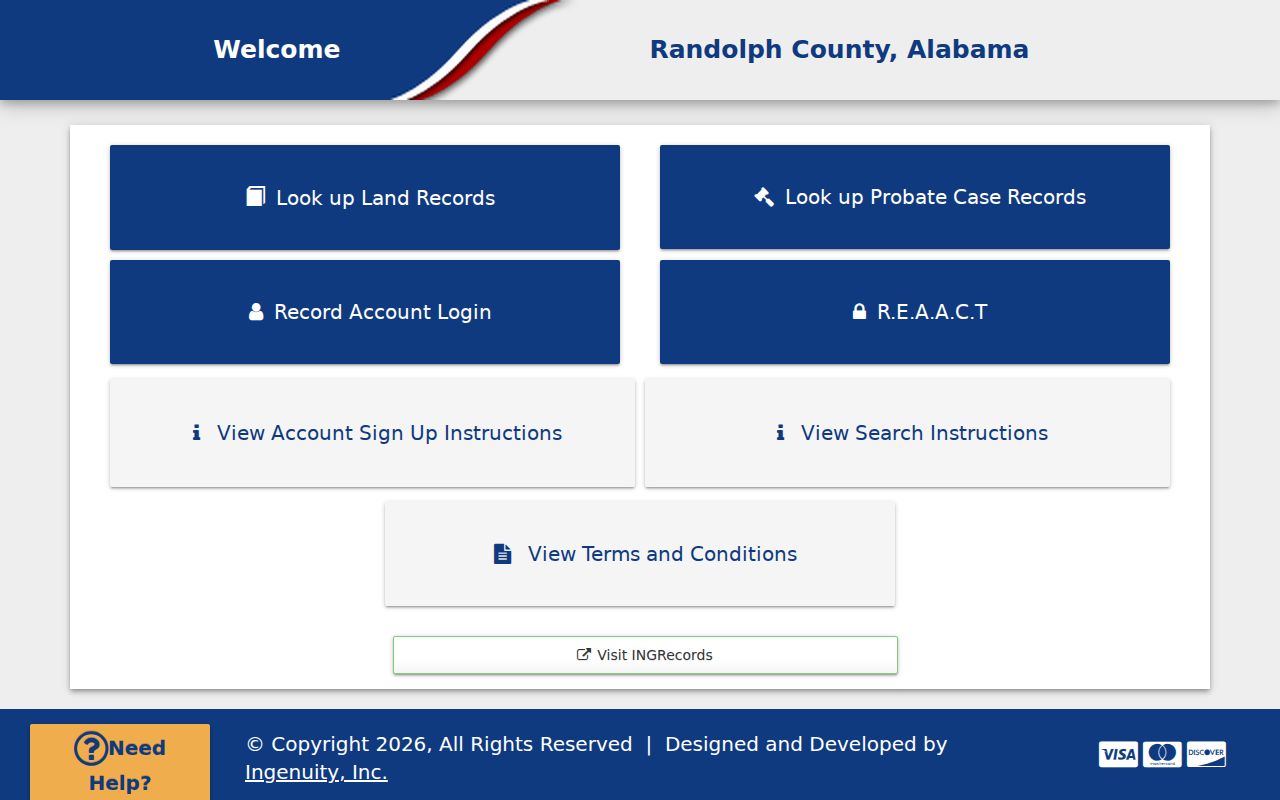
The portal may require a free account or pay-per-document access. Randolph County publishes no starting year for its online deed index.
When Randolph Records Disagree
Timing explains most conflicts in Randolph County property records. The tax roll values land under its state-approved status on September 30. The tax bill follows whoever owned the parcel on October 1. A recent sale can leave a bill in the seller's name. But the buyer still owes the taxes. A new owner of record should record the deed and file an assessment return quickly. Even then, the mismatch can linger for a cycle.
Start with the deed's recording date. That date may be newer than the current roll. Call Revenue at 256-357-4343 and ask when the transfer will post. Keep a copy of the assessment-return date too. The deed and the parcel number may describe different land. Do not guess in that case. Ask Probate or a title professional before trusting either name.
Note: Randolph County publishes no fixed deed-to-assessment update lag. Treat any promised timeline with caution.
Trusts Estates and Randolph Owners
Trust and estate names deserve extra care in a Probate deed search. Start with the spelling exactly as indexed. Then test initials, punctuation, reversed surname order, and the role filters. An estate transfer may lead to a probate file or to a later deed. Trust deeds often name their trustees. Even so, the public index does not always reveal every interest behind a trust.
A different approach fits a business entity named in Randolph County property records. The Alabama Secretary of State business search covers entity names and entity IDs. It also searches by officer, registered agent, or incorporator. That filing can separate two similarly named entities. It has limits. Registration never makes an agent the owner of record. It cannot prove an undisclosed beneficial owner.
Keep each record in its lane. The Secretary of State filing confirms that an Alabama entity exists. It shows the entity's public filing details. The Probate deed is what ties a grantee name to the described parcel. An entity may have changed names. Search both the old and new forms in the deed index. Inspect any merger, correction, assignment, or cross-reference that appears. Never swap an officer's or agent's personal name for the deed's grantee. That filing cannot prove beneficial interest in a parcel.
Randolph City Names Need Care
A Roanoke, Wedowee, or Wadley mailing address does not place the parcel inside city limits. The postal line only tells you where the mail goes. Randolph County still keeps the core records. The Revenue office holds parcel and assessment data, and Probate holds the deed records. Municipal offices answer city zoning and permit questions instead.
That split matters for any owner search tied to land use. Confirm the mapped parcel first, then check whether municipal rules apply. A postal locality or police jurisdiction is never a substitute for the legal description. Neither is a nearby community name.
Document a Randolph Owner Search
A good search note shows what you checked and where you stopped. Record the query spelling, name role, date range, parcel number, book and page, URL, and access date. Note any limit you hit. State if an image required payment or if the online index ended before the transfer you needed. Probate can answer questions directly. Call 256-357-4933, write to P.O. Box 249 in Wedowee, or visit the courthouse counter.
Older records may need the physical deed books. The Alabama Archives and FamilySearch statewide collections serve as historical fallbacks. Their broad date ranges cannot establish a Randolph-specific online cutoff, so a county-filtered record or office confirmation is still required.
The official ING instructions suggest more audit detail. Log the Search Type, date span, name role, Starts With setting, and instrument-type filter. Condensed results hide all but the first names. Display all indexed names before ruling out a match. Book and page can open a document window when an image is offered, and purchased pages generate a download plus an emailed receipt. Signed-in documents stay in My Documents for 30 days. Save your evidence while access is active. A blocked image never proves a deed went unrecorded.
Limits of a Randolph Owner Lookup
An assessment name plus a deed-index match is real evidence. It is not a title opinion. A later unindexed instrument, estate proceeding, correction, life estate, trust term, lien, or court order can still change the interest. Recorded documents never prove who occupies the property. A purchase, estate matter, or disputed claim calls for qualified title help.
Public access is not permission to republish. Keep only the facts your property task needs. Alabama Code §36-12-40 gives residents access to public writings subject to exceptions, while confidential data and portal terms still apply.
Use records lawfully. Owner information supports property diligence and civic research; never use it to stalk, threaten, or harass a person.