
Randolph County Owner Record
Randolph County's Revenue Commissioner maintains the assessment side of the record. County material describes property record cards. They list land and building traits, value, classification, and tax information. The online search displays no guaranteed title label. So call the name an assessment owner of record. Assessment follows a calendar. Alabama property is valued by its status at the close of September 30. October 1 anchors the assessment year. Timing matters when you weigh the roll against a newer deed.
| Owner name | The person, trust, estate, or entity carried on the assessment roll |
|---|---|
| Mailing address | The destination for tax notices, which may differ from the land address |
| Situs address | The physical property location used to identify the parcel |
| Parcel identity | The county map or account reference used to keep records aligned |
| Legal description | Lot, block, acreage, or other land description that helps confirm the match |
| Deed reference | The book, page, or instrument clue that should be checked in Probate |
The roll never proves who lives on the land. The mailing address simply shows where tax mail goes. It may sit far outside Randolph County. That gap is common, and it is useful. It separates the owner of record from an occupant without assuming anything about either person.
Check the record year beside any name the card displays. Match the parcel identifier and legal description before calling two results one tract. Randolph County holds roughly 36,500 parcels. A shared surname or a similar rural address proves nothing. The parcel number keys the map and assessment files. The deed's land description is the stronger continuity check. Without a refresh date, treat the card as the assessment snapshot on the day you searched it.
Randolph Owner Roll Timing
Randolph County warns that a new tax bill can stay in the prior owner's name. A deed may have been recorded after the roll's annual status date. Or the buyer may not have filed the assessment return Revenue expects. Neither mismatch signals fraud. The roll and the recording index are records built for different jobs.
A buyer should keep the closing date, deed recording information, and assessment-return date when asking Revenue to correct the account. Taxes are collected in arrears. The county calls its tax notices a courtesy. Waiting for the printed name to change can cost a deadline. Randolph County publishes no fixed update lag. No number of days should be promised.
Recent sale check. The assessment roll can lag a transfer. The newest recorded deed is the stronger current-owner evidence.
After Randolph Records a Deed
Recording and assessment are separate acts. The Randolph County Probate Judge records deeds and related instruments. Revenue says a buyer must record the deed and file an assessment return. The deed enters the public land-record system. The return puts the new owner and mailing details on Revenue's roll.
Match deeds by legal description, grantor, grantee, and recording reference; the grantee is the party receiving the interest. Corrections, estates, and trusts can change the name. A plain name may not tell the whole story.
Probate's portal offers a free-account route or pay-per-document access. Controls cover role, date range, book and page, Starts With, instrument type, cross-reference, and all indexed names. Use only what finds the newest conveyance. A result row is an index lead. The full instrument carries the description, exceptions, and terms that shape how ownership reads.
Randolph Mailing and Situs Fields
A situs address marks the land's physical location. The mailing address is where the assessment office sends tax notices. The two can match, but often they don't. Rural routes and post-office boxes widen the gap. Out-of-area owners widen it too. Neither field replaces the parcel number or legal description.
Randolph-area ZIP names reach past municipal lines too. Roanoke, Wadley, and Wedowee share postal geography with rural land. Confirm the situs and municipality in the county parcel system. Never treat a mailing city as proof of city limits.
Entity Owners in Randolph County
The owner may be an LLC, trust, or estate. Search the full legal form shown on the roll. Then test punctuation, initials, suffixes, and older name forms in Probate. The land-record instructions support grantor, grantee, assignee, and all-role searches, plus a Starts With control. Starts With is not a fuzzy match.
For an Alabama business entity, the Secretary of State business search can return entity-name and ID records and may list officers, agents, or incorporators. Those filings identify the entity's public contacts. They do not prove personal ownership of the real estate, nor reveal a trust beneficiary.
Randolph Parcel Card Evidence
The county-linked Randolph parcel viewer is free and open to the public. It works well for map-based property research. The dynamic parcel card, though, only fills in on the live screen. There, confirm the owner label and the assessment year. Confirm the parcel number and any update date before relying on the result. Save the date of the search along with what the card displayed.
The viewer's landing screen marks the official starting point for that check.
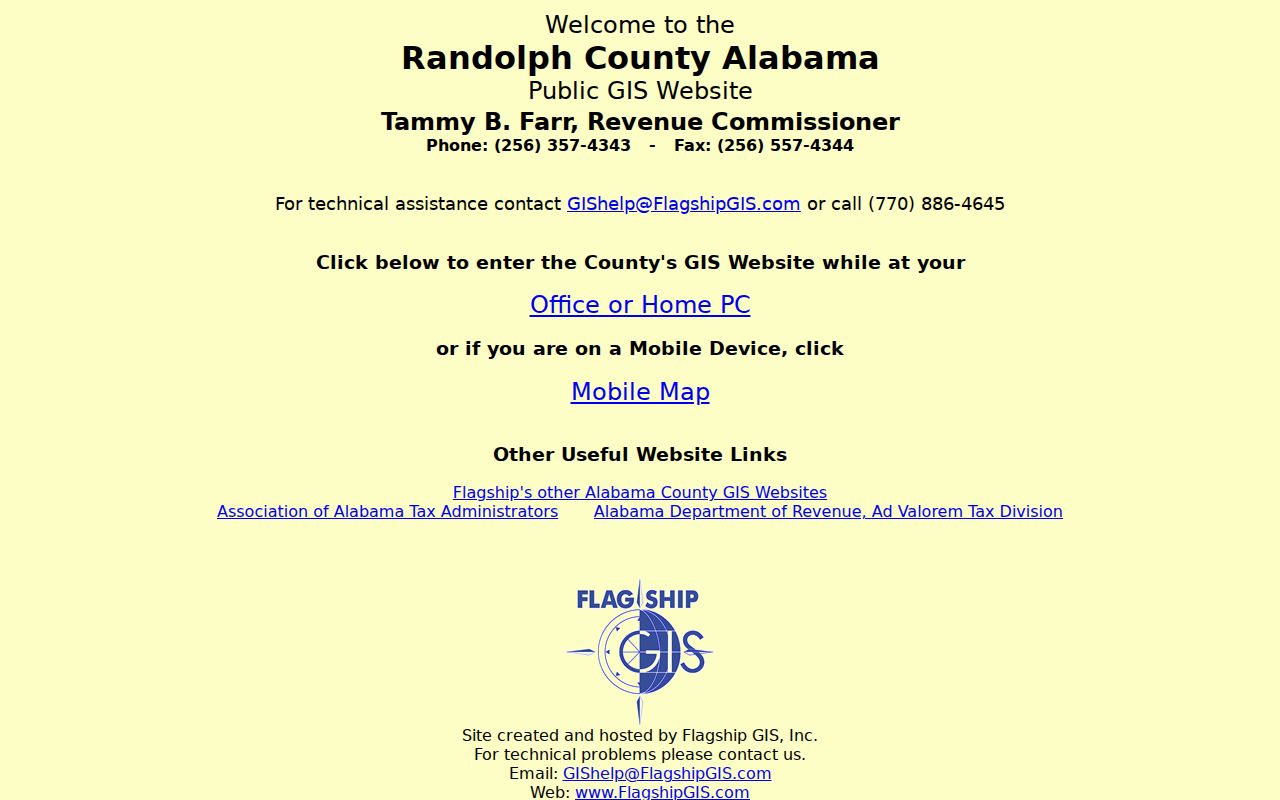
The image shows where the county's parcel viewer opens, nothing more. It does not establish who holds title or confirm any current owner's identity.
Confirm Randolph County’s Current Owner
Hold the parcel number steady as the search moves from the assessor's assessment data to the recorder's deed records. A matching name alone proves little, since common names repeat across the county. The latest deed should describe the same land and show a transfer consistent with the owner of record listed today.
- Open the Revenue-linked parcel viewer and record the owner name, situs, parcel reference, legal description, and assessment year that are actually displayed.
- Use the ING Probate land-record portal to search that party as a grantee and inspect the newest relevant deed.
- Compare the grantor, grantee, land description, and book/page or instrument reference. Review cross-references when the result lists them.
- If the deed is newer than the roll, ask Revenue about its assessment-return process and give both offices the precise parcel and recording facts.
- Owner of record
- The party carried as owner in a named public record at a stated time.
- Assessment roll
- The Revenue record used to value and tax property on an annual cycle.
- Situs address
- The physical property location, distinct from the owner’s mailing address.
- Recording lag
- The interval between a transaction and its appearance in another county system.
Randolph’s Roll-Lag Clue
The tax roll and the deed index can disagree. That mismatch is one of Randolph County's most useful clues. An older owner on a tax notice and a newer grantee in Probate can both be valid records, just created at different points in the cycle. Compare the dates first. Never treat a stale roll entry as an error before contacting the office that produced it. Keep a dated copy of each document. Note which office issued it. That small audit trail makes any later update easy to explain. Revenue sets assessments as of the annual status date. Probate indexes an instrument when it is recorded. A current owner check is strongest when it states both dates plainly.
Randolph Owner Privacy Boundaries
A public owner or mailing field can serve a lawful property question. Think a purchase inquiry, a boundary discussion, an estate matter, or a suspected recording error. Keep the inquiry tied to the parcel itself. Do not republish signatures, full birth dates, account details, protected addresses, or other personal facts that surface in a recorded document image. An assessment name is not permission to track an occupant. It is also not a title opinion. For a transaction or a dispute, pull the recorded deed and seek qualified title or legal help when the risk warrants it.
Lawful use. Randolph County owner records support due diligence and civic research. Never use them to harass, intimidate, or harm a person.